Friday, March 13, 2015

Quick Tips to Write An Email To Your Child's Teacher

        Quick Tips on How to Write An Email to Your Child’s Teacher 

communicate effectively with the teacher, accelerated learning services
I have found that the best way to communicate with a teacher is to be short, concise, and straight to the point.  Teachers are very busy people and they don’t have all day to read and respond to lengthy emails. If you have ever noticed, their emails contain as few words as possible (unless they feel that they have been “attacked” and feel the need to “defend” themselves). Nevertheless, communication is key in having a good relationship with your child’s teacher.  Sending out a not so nice email may not be the best approach. Learn how to draft an effective email to request a conference with your child’s teacher.

Here’s a sample email that was sent to my child’s teacher:

Good afternoon Mrs. Brown,

I hope all is well and you’ve enjoyed the nice weather this weekend with your family.  I truly appreciate your hard work and everything that you do to help my son.  I would like to schedule a conference to discuss his progress in your class. We want to know about his phonic skills (i.e. digraphs, dipthongs, long vowels, consonant blends, etc.), addition and subtraction skills (which numbers are mastered and which ones he needs help with), writing skills (specific letters he needs practice with, punctuation, capitalization, # of sentences, etc.), reading comprehension, and sight words.  Tuesdays or Wednesdays work best for us.

Please let me know when you would be able to meet with us.  I look forward to discussing his progress with you soon. Thank you in advance.

Sincerely,


      1.      Title the email using your child’s first and last name.

      2.      Use a greeting to suggest a time of day.

      3.      Begin with a comment that makes the teacher feel like you know that they are human and have a life outside of teaching your child.

      4.      Acknowledge the hard work that the teacher does in the classroom specifically for your child.

      5.      Get directly into the purpose of the email. What are you requesting/needing?

      6.      Tell the teacher exactly what questions you have and what information you’re expecting to gain from the conference.

·         This allows the teacher time to successfully prepare for the conference and to be able to address all of your needs and concerns

·         Notice that there is no mention of “concerns” in the email, however.  We do not want the teacher to be on the defensive immediately during the conference nor in her response in the email.

      7.      Let the teacher know your availability.

      8.      Ask the teacher to get back to you with a date and time and let him/her know how urgent you would like for them to respond.

·         Try to avoid using words or phrases like “ASAP” (as soon as possible) or “immediately” because they may offend the teacher.

·         It is ok to give a respond by date but be sure to allow a 24-48 hour response time.
 
·         It’s also important to let them know how soon you would like the conference scheduled (i.e. this week, next week, within the next 2 weeks).

      9.      Thank the teacher once more.

     10.    Use a closing and include your full name with contact information.

It’s all about the tone.  There is nothing that would cause the teacher to misread the tone of your email and cause confusion if you follow these easy steps and model the example above. 

Once you have a confirmed date and time scheduled for the conference with your child’s teacher, begin writing down questions that you would like to ask the teacher.  See our article, 11 Best Questions to Ask aTeacher at a Parent/Teacher Conference, for some great questions to begin with.

Have you ever sent an email to your child’s teacher and the communication just went wrong from that point on?  How were you able to turn it around?

Share your stories in the comment area.  We would love to hear from you.  Share this article with your friends and family if you found it to be helpful.

Monday, February 23, 2015

6 Reasons Why You Should Know Your Child's Learning Style

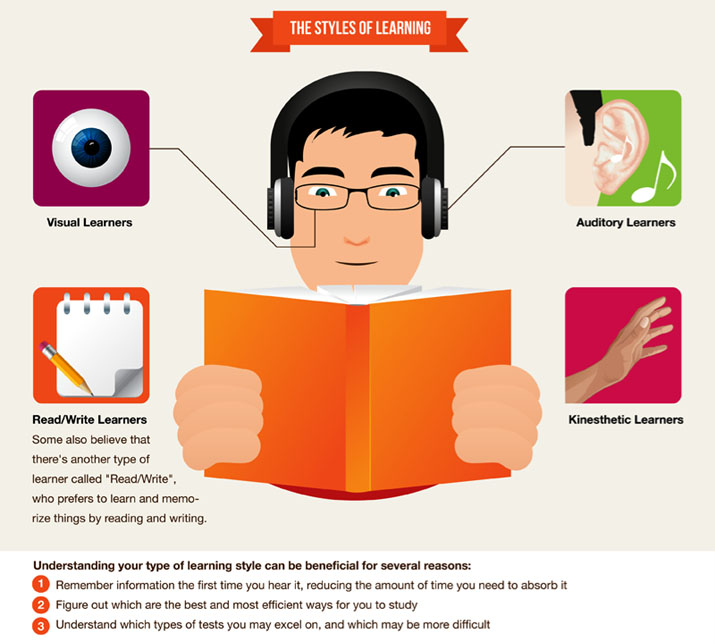
How can we teach children to think for themselves if we don’t know how they think?  How can children learn to think for themselves if they don’t know they learn?  The way a child learns affects his/her entire personality and development. Having a full understanding of his/her learning style means that a child has an understanding of how they function as an individual.

n  A learning style is…
•         a way to take in and process information
•         different approaches or ways of learning
•         a preference that gets stronger the more it is used
•         the way the mind operates
•         the way we learn!

There are 3 main types of learning styles: visual, auditory, and kinesthetic.  Visual learners process and learn new information by seeing things, auditory by listening and kinesthetic by movement and a hands-on approach. Most people share some characteristics of more than one learning style but have a strong preference usually for one style.  It is important that you learn your children’s learning style as well as your own. The reasons below explain why.

auditory, visual, kinesthetic, tutoring, comprehension


Reasons why knowing your child’s learning style is important:

1. You now know and understand how they think

  • Knowing their learning style helps you to figure out how they process information and their style of thinking.  If you know how they think, you’re better able to break information down in a way that they understand it.

2. It helps to explain their personality

  • Once you discover their learning styles, their personalities make much more sense. For instance, auditory learners talk a lot and like to debate.  Because they learn by hearing, it’s no wonder they like to hear themselves talk. Kinesthetic learners are busy-bodies.  They simply cannot sit still; moving helps them process information.

3. It helps you to communicate with them better

  • Once you know how your child learns, it’s easier to determine how to communicate with them.  Giving verbal directions works well for auditory learners but not for visual learners. Visual learners need their directions written down for reinforcement. The more you know about your child’s learning style, the better your relationship can become due to better communication.

4. It helps you to help them study

  • Understanding your child’s way of learning helps you to determine what methods of learning best fit their needs.  Once you figure that out, it’s easier to implement effective study strategies. An example for visual learners is to utilize videos to demonstrate concepts or ideas.  They will benefit more from seeing the video than you simply describing what to do.

5. It helps you understand their behavior

  • Some of your child’s behavior may be explained by their learning styles.  Familiarizing yourself with the characteristics of your child’s learning style will help you to understand why they act a certain way and aid you in addressing them appropriately and with more patience.  For example, parents of kinesthetic learners find it difficult to get them to sit still while doing their work.  Instead of becoming frustrated and forcing them to sit still, allow for structured movements such as bouncing on an exercise ball or doing a celebratory dance when they are done reading or have completed a math problem correctly.

6. It makes for a better relationship

  • Once you understand your child’s learning style (and your own), the communication between the two of you gets better, your are able to apply effective strategies to manage their behavior, you know how they think and begin to use that to help them study effectively and even apply it to non-academic areas, your relationship with your child should improve.  The best relationships are those in which each one understands one another and can communicate better.

Take a quick learning style assessment and have your child to take an age-appropriate learning style inventory. Check out more information about learning style personalties and resources for study skills.

Sign up now for FREE CLASSES that will go into detail about how to utilize learning styles to be successful in school and at home.


Wednesday, February 5, 2014

Black History Trivia & Facts #2

As we celebrate Black History Month, learn interesting facts that you may not have known.
Email not displaying correctly?
View it in your browser.

Daily Black History Trivia Contest

February 6, 2014

Daily Black History Trivia Question

Who was the first African American major league baseball player?
  1. Jackie Robinson
  2. Satchel Paige
  3. Larry Doby
  4. Ernie Banks
To answer the question, click here!

Want to win free tutoring, free Spanish/French classes, discounts on our services, and more?  Play the Daily Black History Trivia Challenge on your mobile device.  Text "blackhistory" to 99000.  The question will be sent to your phone.  Answer the question.  Win a prize when you get the answer right!

Robert Lewis Douglas

February 6, 1972
On this day in 1972, Robert Lewis "Bob" Douglas, Founder, Owner and Coach of the New York Renaissance (the RENs) basketball team, is inducted into the Naismith Memorial Basketball Hall of Fame.

Jail-In Movement

February 6, 1961
Jail-in movement started in Rock Hill, S.C., when students refused to pay fines and requested jail sentences. Students Nonviolent Coordinating Committee urged south-wide "Jail, No Bail" campaign. CORE organizer Thomas Gaither introduced “Jail, No Bail” in an effort to make the sit-ins more successful, gain new media attention, and decrease the amount of funds spent on bail ($17,000 in bail money had already been spent). Read more...

About Us

Accelerated Learning Services provides tutoring, test prep, college prep, and study skills for students in grades K-12, college, and even adult learners.  We tutor locally (Atlanta, CSRA), nationally, & internationally.  100% of our clients have matriculated to the next grade level or passed their college level courses upon receiving educational support services from us.  YOU CAN BE NEXT!!

The Mayflower of Liberia

February 6, 1820
The first organized emigration back to Africa begins when 86 free African Americans leave New York Harbor aboard the Mayflower of Liberia. They are bound for the British colony of Sierra Leone, which welcomes free African Americans as well as fugitive slaves.  Read more...

Contact Us

Local: 404-933-2235
Toll Free: 855-3-TUTOR-ME
Email: info@acceleratedlearningservices.com
Website: www.alstutoring.com